
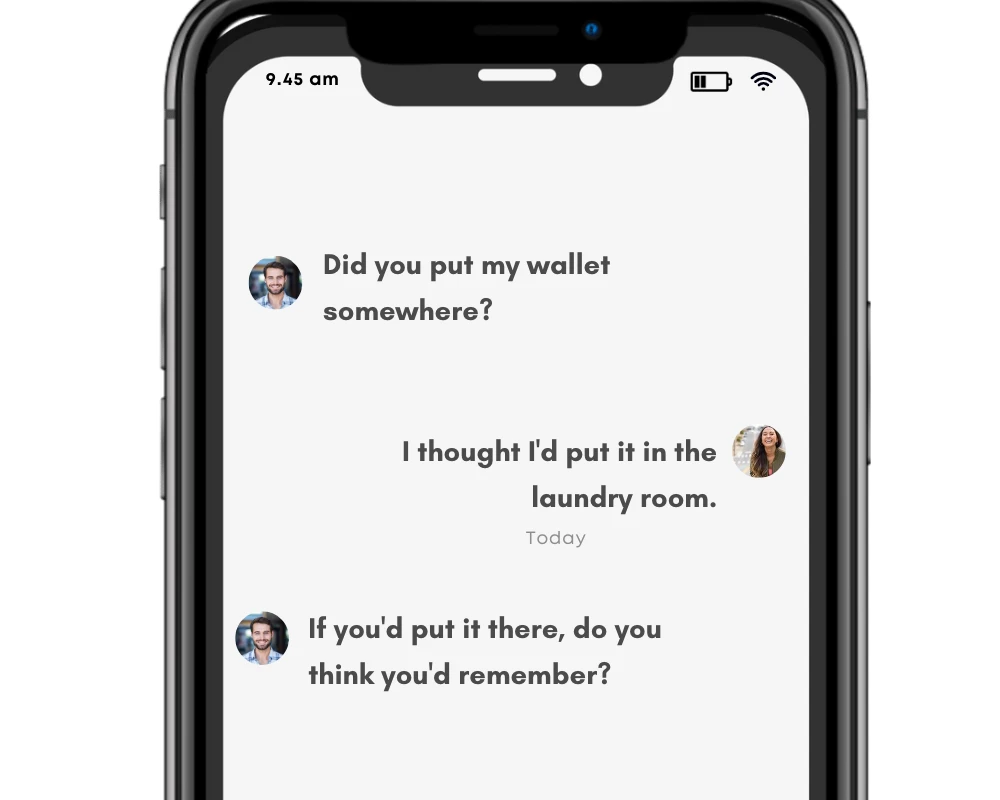
What's the past tense of "put"?
The simple past tense of put is put, and the past participle is also put. Use put for both simple past and past participle forms.
Definition of put
The Oxford English Dictionary defines put as "to move something into a particular place or position; to place or set something down." It's used in both literal and figurative senses, from physical placement to expressing ideas.
- The past tense of put is put.
- The past participle of put is put.
Verb forms of 'put'
Is "put" a regular or irregular verb?
Note: Regular verbs end in -ed in the past tense. Any other verb ending is considered irregular.
While an irregular verb, 'put' shows a highly common verb-conjugation pattern. Similar to other verbs like hurt, shut, bet and set, put uses one form for all tenses.
When to use "put" (past) vs. "put" (participle)
He put the book on the shelf.
I've put a lot of thought into this decision.
The participle form of a verb (shown in the second sentence) uses the auxiliary verb have as a contraction, I've.
When auxiliaries like have or had appear in the same sentence as a past participle verb form, this indicates that the verb's aspect is in the present or past perfect, and not the simple past tense.
Remember, a participle always uses a helper verb to form the complete tense or aspect. Simple tenses, on the other hand, can stand on their own.
Sentence examples: put, put, put
• I always put my books on the table when I get home.
• She puts her keys in the same bowl by the door.
• Please put the car in the garage when you get home.
• He put his arms around her and held her tight.
• She put her house up for sale last month.
• They put us up last weekend.
• I have put a lot of thought into this decision.
• She has put on some weight recently.
• We had been put off by the sights in the city.
Synonyms & nearby words
Synonyms for put
Nearby phrases
Origin of the verb put
Middle English putten, from late Old English *putian, "to thrust, push, shove" (someone or something; a sense now obsolete), also "to move or a thing physically so as to place it in some situation".
Practice: "Put" conjugations
She ______ the book back on the shelf after she finished reading it.
He couldn't find the file because he had ______ it in the wrong folder.
He always ______ his keys in the same bowl by the door.
I am ______ together a new bookshelf, and it's quite complicated.
Please ______ your shoes by the door when you come inside.
FAQs
What is the past tense of "put"?
What is the past participle of "put"?
Is "putted" ever correct?
Is "put" a regular or irregular verb?
What are some common phrases with "put"?
Sources
-
Oxford English Dictionary. "put, v." OED Online. Oxford University Press. Date of access 15 Jan. 2025.
-
Cambridge Dictionary. "put." Cambridge University Press. Date of access 15 Jan. 2025.
Advertisement


.webp&w=3840&q=75&dpl=dpl_13tcGbrn5BXPQFsQmuQWqib9Y3DN)